Basketball Line Venti Cup Wrap SVG
A Designer’s First Look: Clean, Sporty, and Surprisingly Versatile
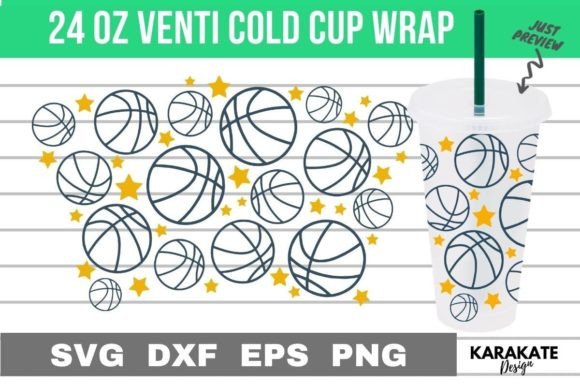
When I opened Basketball Line, 24oz Venti Cup Wrap SVG, my first thought wasn’t “coffee cup”—it was “clean vector energy.” The design reads as a confident, modern basketball motif: bold outlines, rhythmic line work, and just enough negative space to breathe. It doesn’t scream “cartoon” or lean into cluttered detail—it’s graphic, intentional, and built for translation. As an embroidery designer who’s stitched everything from nursery onesies to boutique aprons, I immediately saw how this could shift beyond its stated use case. Yes, it’s labeled for a 24oz Venti cup wrap—but the rhythm of those lines? That scale? That minimal-yet-recognizable silhouette? It’s tailor-made for embroidery.
Where It Shines in Real Embroidery Projects
I tested Basketball Line, 24oz Venti Cup Wrap SVG on a few real-world items: a heavyweight cotton tote bag, a midweight unisex sweatshirt, and a linen tea towel. On all three, it held up beautifully—not because it’s overly complex, but because its simplicity works *with* stitch behavior. The clean contours translate cleanly into satin stitch borders; the open areas allow fill stitch to settle evenly without puckering. As a machine embroidery design, it’s forgiving on standard stabilizers and doesn’t demand ultra-fine thread or specialty needles.
For Etsy sellers and small shop owners, this is gold: it’s instantly recognizable as basketball-themed (no decoding needed), yet neutral enough to avoid gendered or age-specific assumptions—making it ideal for custom apparel, embroidered patches, baby embroidery (think gym-bag-style diaper totes), or even holiday embroidery like Father’s Day gym bags or graduation gift towels. I also used it as a subtle chest accent on a navy cap—scaled down to 2.8”, it retained legibility and sporty charm without overwhelming the curve.
Where to Pause—and Why
This isn’t a “set-and-forget” embroidery file. Its strength lies in intentionality, not automatic adaptability. On thin or stretchy fabric—like lightweight tees or ribbed knit baby onesies—I recommend testing first with light tear-away stabilizer and reduced top tension. The line weight is consistent, but tight curves can compress in dense fill areas if stitch density isn’t adjusted. Similarly, on dark fabric, the design’s reliance on outline clarity means thread color contrast matters more than usual: a charcoal gray satin stitch on black twill can blur; crisp white or neon orange pops far better.
It’s also not ideal for tiny hoop sizes (under 3” diameter) without simplification—those subtle line breaks near the ball’s seam don’t resolve well below 2”. And while it works on curved surfaces like caps, avoid placing it across high-stretch seams (e.g., side panels of performance wear) unless you’ve confirmed stabilizer hold and fabric recovery in your test run.
What This Means for Your Handmade Product & Brand
Basketball Line, 24oz Venti Cup Wrap SVG elevates perceived value without demanding premium time or materials. When stitched cleanly on a well-chosen tote or sweatshirt, it reads as professional—not craft-fair-cute, not mass-produced-generic, but confidently handmade. Customers notice that difference: it signals care in selection and execution. For craft business owners, that builds trust. For Etsy sellers, it improves click-through on listings where mockups show sharp, balanced embroidery—not pixelated PNGs or distorted vectors.
It also supports brand consistency. Because it’s delivered as a Graphics bundle (SVG, DXF, EPS, PNG @ 300 DPI), you can repurpose the same asset across product photography, digital embroidery file previews, printable mockups, and even simple screen-printed tags—keeping your boutique’s visual language tight and cohesive.
Practical Designer Notes Before You Stitch
- Always test on scrap fabric first—especially if using textured fabric like terry cloth or fleece, where line definition can soften.
- Check thread color contrast early: try black/white mockups before committing to final thread choices.
- Review stitch density in your embroidery software: reduce fill density by 5–10% for lightweight fabrics or layered garments.
- Confirm hoop size compatibility: the original layout fits comfortably in a 4x4 hoop at full scale—but verify scaling in your editing software before sending to machine.
- Inspect small details at 200% zoom: look for unintended overlaps or gaps in the vector paths—these become visible stitch errors.
- Use appropriate stabilizer: medium-weight cutaway for knits, tear-away for stable wovens, and fusible + tear-away for nap-free linens.
- Verify licensing: since this is a digital embroidery file sold in the Crafts category, confirm whether commercial use (e.g., selling finished embroidered totes on Etsy) is permitted under the seller’s terms.
Final Thought: A Quietly Confident Design Asset
Basketball Line, 24oz Venti Cup Wrap SVG won’t shout—but it will resonate. It’s the kind of embroidery file that works hardest when you’re not overworking it: no excessive digitizing tweaks, no last-minute panic about legibility, no buyer confusion about theme or intent. Whether you’re building a small shop product line, prepping personalized gifts for coaches’ families, or adding subtle team spirit to kitchen towels for a local sports bar’s merch rack—it delivers clarity, consistency, and quiet professionalism. In a market flooded with busy, over-digitized designs, sometimes the most valuable embroidery file is the one that simply knows what it is, and does it well.