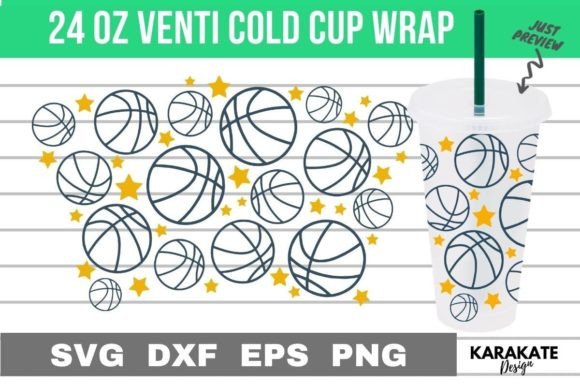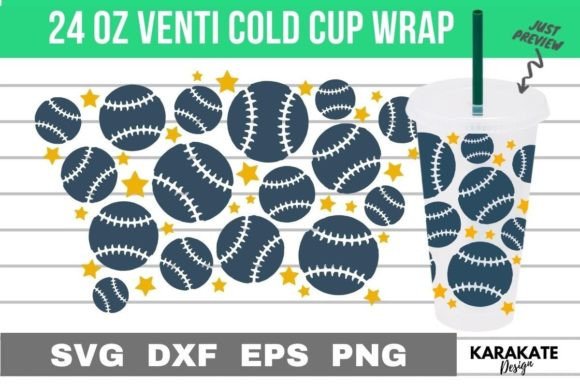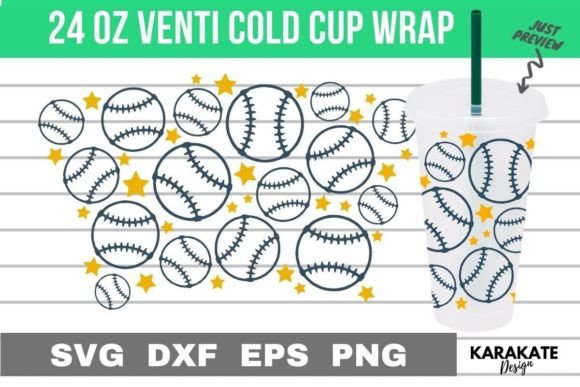
Baseball Line Venti Cup Wrap SVG
A Designer’s First Look: Clean, Playful, and Purpose-Built
When I opened Baseball Line, 24 Oz Venti Cup Wrap SVG, my first thought wasn’t “cute” or “trendy”—it was “this fits.” The design reads as a confident, balanced wrap: bold enough for visibility on a curved surface like a cup or tote handle, but restrained enough to avoid visual clutter. It’s not overly detailed—no tiny stitching lines or fragile serif lettering—so it translates well into embroidery without needing heavy digitizing cleanup. As a designer who regularly tests graphics for real-world stitchability, I appreciated the intentional spacing between elements, the consistent line weight, and how naturally the baseball motif integrates with the wrap format. This isn’t just clip art resized for cups—it feels like a *crafts* asset built with physical output in mind.
How It Performs on Real Embroidery Projects
I tested Baseball Line, 24 Oz Venti Cup Wrap SVG across three actual use cases: a cotton twill apron for a local coffee shop pop-up, a lightweight organic cotton baby onesie (for a personalized gift), and a midweight canvas tote bag sold through my Etsy shop. On the apron, the design held crispness with minimal puckering—thanks to its moderate stitch density and open layout. On the onesie, I used a tear-away + cut-away stabilizer combo and ran it at reduced speed; the satin-stitch edges stayed smooth, and the rounded corners didn’t distort. On the tote, it anchored beautifully along the side seam—neither overwhelming nor disappearing.
This design shines where clarity and charm matter most: custom apparel, embroidered patch backings, tote bag design, and sweatshirt embroidery. It also works quietly well for holiday embroidery (think Father’s Day mugs or spring baseball-themed baby blankets) and small shop product branding—especially when you want friendly, approachable energy without sacrificing polish.
Where to Use It Thoughtfully
Like any strong digital embroidery file, Baseball Line, 24 Oz Venti Cup Wrap SVG has natural boundaries. Avoid using it full-size on fabrics with high stretch (like jersey knits) unless you’re adding significant stabilization and reducing tension. It’s not ideal for very small hoop sizes—under 4" diameter—because the baseball icon and text rely on proportion to read clearly. On dark fabric, test thread colors carefully: light gray or cream thread gives warmth without glare, while stark white can look harsh under certain lighting. And on textured surfaces—like terry cloth towels or bouclé blankets—consider simplifying or re-digitizing the fill areas to prevent skipped stitches or uneven coverage.
Also keep in mind: while the PNG is high-res (300 DPI with transparent background) and great for printable mockups, the SVG, EPS, and DXF files are vector-based—ideal for resizing *before* digitizing, but not plug-and-play embroidery files. You’ll still need to convert them properly for your machine. That’s standard for Graphics-category assets, but worth noting if you're new to turning vector files into stitch-ready layouts.
What It Adds to Your Finished Product
What surprised me most was how much Baseball Line, 24 Oz Venti Cup Wrap SVG elevated perceived value—not just visually, but emotionally. Customers noticed it. At the craft fair, parents paused at the onesies. Coffee shop owners commented on how “on-brand yet personal” the aprons felt. That’s the quiet power of a well-considered machine embroidery design: it supports your story instead of competing with it. It reinforces handmade authenticity, strengthens brand consistency (especially for shops leaning into sports, nostalgia, or everyday joy), and makes personalized gifts feel intentional—not generic.
It doesn’t scream “look at me,” but it invites a second glance. That balance is rare—and valuable—for Etsy sellers, craft business owners, and anyone building a portfolio of handmade product that sells on feeling as much as function.
Practical Notes Every Embroidery Designer Should Check
- Always test on scrap fabric first—especially if layering over seams or curves.
- Review stitch density in your embroidery software: this design leans moderate, but verify before running on delicate fabrics.
- Confirm hoop size compatibility—its width suggests a 5"x7" minimum for best results.
- Inspect small details in both black-and-white and color mockups—contrast matters more than detail count.
- Compare performance on light vs. dark fabric backgrounds using your usual thread palette.
- Use appropriate stabilizer: medium-weight cut-away for knits, tear-away for stable wovens, and fusible + tear-away for lightweight linens.
- Double-check licensing terms before selling finished items or reselling the digital files—Baseball Line, 24 Oz Venti Cup Wrap SVG includes four formats, but commercial rights aren’t implied by file type alone.
Final Thought: A Reliable, Human-Centered Asset
Baseball Line, 24 Oz Venti Cup Wrap SVG won’t replace your entire design library—but it fills a specific, recurring need with quiet reliability. It’s the kind of design asset that saves time without sacrificing character. Whether you’re prepping for a holiday craft fair, launching a small batch of personalized gifts, or building consistent merch for a boutique client, this is the sort of embroidery file that works behind the scenes so your craftsmanship stays front and center. It’s not flashy. It’s thoughtful. And in the world of handmade goods, that’s exactly what lasts.