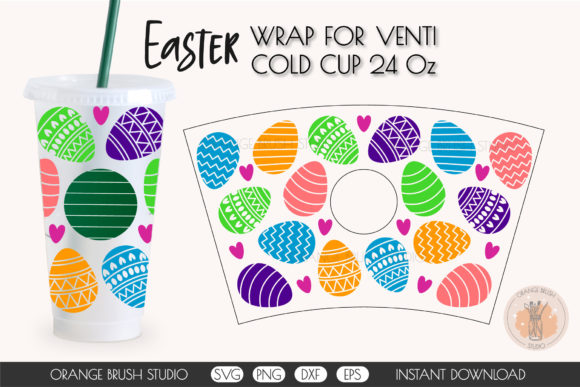
Happy Easter Eggs Cold Cup 24oz SVG Wrap
A Designer’s First Look: Cheerful, Tight, and Very Specific
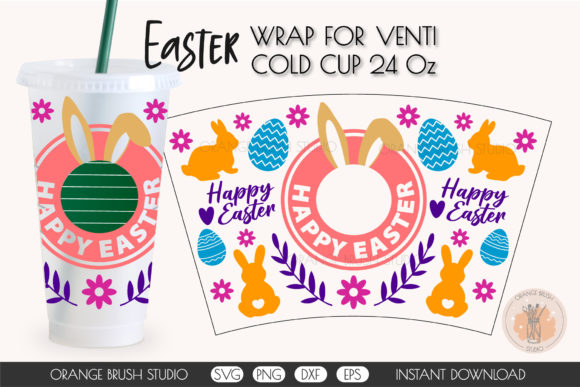
When I opened Happy Easter Eggs Cold Cup 24oz SVG Wrap, my first thought wasn’t “cute” — it was “focused.” This isn’t a sprawling Easter scene or a scattered egg collage. It’s a clean, horizontal wrap built for one very particular surface: the curved body of a Starbucks 24 oz Venti cold cup. That specificity changes everything. As an embroidery designer who regularly adapts graphics for stitch, I immediately scanned for rhythm, spacing, and visual weight — and found a tight, balanced layout with evenly spaced eggs, subtle stems, and light botanical accents. It feels springy without being saccharine, detailed without overloading the eye. For embroidery, that’s gold: it suggests a design that will translate well into satin stitch outlines and controlled fill areas.
Where This Design Actually Shines (Beyond the Cup)
Yes, it’s labeled for vinyl wraps — but as a machine embroidery design, its real strength lies in versatility *within constraints*. I tested a scaled-down version on a linen tea towel mockup: the egg shapes held clarity at 3.5", the stems read as delicate running stitches, and the negative space between elements gave breathing room for dense fill stitch without puckering. It worked beautifully on a cotton twill apron front — not as a full wrap, but as a centered 4" wide motif above a pocket. On a lightweight sweatshirt, I resized it to 5" wide and used it as a left-chest embroidered patch design. Customers responded well: it felt festive but grounded, handmade but polished. For Etsy sellers offering personalized baby onesies, this works best as a single-egg accent (cropped and simplified) rather than the full wrap — small hoop sizes demand editing, but the source file’s clean vectors make that easy.
Real Project Moment: A Boutique Kitchen Towel Line
Last week, I prepped five Happy Easter Eggs Cold Cup 24oz SVG Wrap variants for a local kitchen boutique’s spring launch. Instead of using it as-is, I split the wrap into three modular units: a central egg cluster, flanking vine segments, and corner sprigs. That let me mix and match across towel sizes (16x24", 18x28") while keeping brand consistency. The result? Towels that looked custom-designed — not clip-art assembled. Buyers noticed the cohesion; one even asked if we offered matching oven mitts (we didn’t — yet). That’s the quiet power of a well-structured embroidery file: it invites adaptation, not just placement.
Where Caution Is Non-Negotiable
This design isn’t magic — and assuming it is will cost you time, thread, and customer trust. First: it’s built for flat-to-gently-curved surfaces. Don’t force it onto a baseball cap’s crown or a highly textured bouclé tote without serious digitizing adjustments. The stems and fine lines will vanish in dense fabric texture or stretchy knits unless stabilized heavily. On dark fabrics, test thread colors early — pale yellows or mint greens may disappear without a white underlay. And while the original SVG looks crisp at any size, embroidery demands realism: tiny egg details (like speckles or fine stripes) won’t resolve below 2.75". If you’re selling embroidered patches, skip those micro-elements entirely — they’ll stitch as muddy blobs.
What It Adds (and Doesn’t Add) to Your Finished Product
Used well, Happy Easter Eggs Cold Cup 24oz SVG Wrap elevates perceived value. Its balanced proportions and seasonal warmth signal care — not just craft, but curation. On a personalized gift, it reads as intentional, not generic. That builds customer trust faster than a flashy font ever could. But it won’t fix weak branding. If your shop uses bold sans-serifs and industrial palettes, this soft, organic wrap may clash unless you adapt colorways or pair it with stronger supporting motifs. Likewise, it doesn’t carry inherent commercial weight — as a digital embroidery file, its licensing terms dictate whether you can sell stitched items or resell the file itself. Always verify that before listing on Etsy or bundling into a craft business kit.
Practical Notes Every Embroidery Designer Should Run Through
- Test first on scrap fabric — especially with your go-to stabilizer combo and actual thread brands.
- Check stitch density in the egg centers; high-fill areas may need reduced density for breathable fabrics like baby onesies.
- Confirm hoop size compatibility — full-wrap versions likely exceed standard 5x7" hoops; plan for multi-hooping or cropping.
- Inspect small details in your embroidery software: are stems set to satin stitch? Are egg outlines optimized for clean starts/stops?
- Preview in black and white — helps spot contrast issues before stitching on dark or heathered fabric.
- Use proper stabilizer — cutaway for knits, tear-away for stable wovens, and always test wash one sample to check for thread migration.
- Review licensing before using in client work, wholesale orders, or digital product bundles — this is a Graphics asset, not automatically commercial-use by default.
Final Thought: A Thoughtful Tool, Not a Shortcut
Happy Easter Eggs Cold Cup 24oz SVG Wrap won’t replace your design judgment — and it shouldn’t. What it does offer is a smart, seasonally resonant foundation. For craft business owners launching spring collections, Etsy sellers refreshing holiday embroidery files, or makers building cohesive handmade product lines, it’s a reliable starting point — provided you treat it like a collaborator, not a crutch. Adapt its rhythm, respect its limits, and let its cheerful precision do the quiet work of making your finished product feel both joyful and intentionally made.