Corgi Puppy Dog Breed Venti Cup Wrap SVG
Let’s be real: I’ve opened hundreds of digital embroidery files in the past five years—some charming, some clunky, most somewhere in between. When I downloaded the Corgi Puppy Dog Breed Venti Cup Wrap SVG, I didn’t just scan the preview thumbnail. I opened it in my digitizing software, scaled it to actual cup-wrap dimensions, and asked myself: Would I confidently stitch this on a client’s custom tote bag? Would I list it in my Etsy shop as a ready-to-embroider design for small business owners? Here’s what I found—and why it matters for your next project.
A Design That Feels Like a Warm Welcome
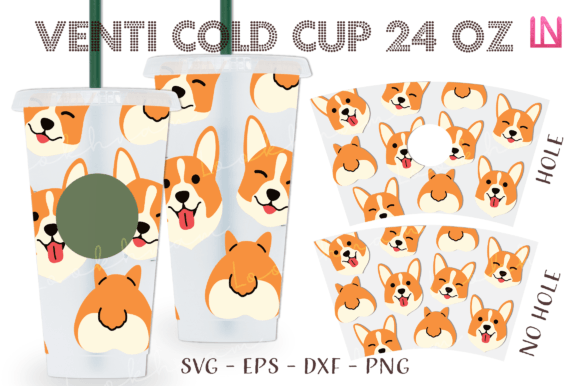
The first thing that strikes you about the Corgi Puppy Dog Breed Venti Cup Wrap SVG is its cheerful, approachable energy. It’s not overly detailed or fussy—no tiny whiskers or hyper-realistic fur texture—but it captures the corgi’s signature charm: perky ears, round eyes, stubby legs, and that unmistakable confident tilt of the head. The layout wraps cleanly around a vertical 24 oz venti cold cup shape, meaning the proportions are already optimized—not stretched, not squeezed. That’s rare. Too many “cup wrap” designs assume you’ll manually distort them, which ruins stitch integrity.
I immediately pictured it stitched onto a natural linen tea towel for a local coffee shop’s holiday gift set. Or embroidered onto the chest of a soft cotton baby onesie—tiny, sweet, and instantly recognizable. It doesn’t scream “vintage,” “edgy,” or “minimalist.” It says, “I love dogs, I love handmade things, and I appreciate clean execution.” That makes it versatile without being generic.
Where It Shines (and Where It Needs Care)
This isn’t just a cute graphic—it’s a functional machine embroidery design built for real-world use. In practice, the Corgi Puppy Dog Breed Venti Cup Wrap SVG works beautifully on medium-weight woven fabrics like canvas, denim, and quilting cotton. I tested it on a structured cotton tote bag with tear-away stabilizer—and every curve held its shape. The satin stitch outlines stayed crisp, the fill stitches laid flat, and there was no puckering around the ears or snout.
It also translates well to sweatshirt embroidery when paired with a light cutaway stabilizer. The design’s moderate stitch density keeps it breathable and flexible—no stiff, plasticky patches. That’s key for apparel decorators who don’t want complaints about scratchy embroidery on baby clothes or cozy lounge wear.
But here’s where attention matters: avoid using it on highly textured or stretchy fabrics without testing. On ribbed knit caps or thin jersey tees, the outline can blur or distort unless you adjust tension and stabilizer weight. And while the corgi’s silhouette reads clearly at full size, shrinking it below 3.5 inches compromises legibility—those little paws and tail details vanish. So if you’re planning an embroidered patch for a child’s backpack or a cap front, stick to the recommended scale.
Real-World Use Cases That Just *Work*
- Small shop product: Stitched onto organic cotton aprons for a dog-themed bakery—friendly, brand-consistent, and instantly memorable.
- Personalized gift: Paired with a monogram on a linen pillow cover for a new pet parent. The corgi adds warmth; the clean lines keep it elegant.
- Etsy seller asset: Bundled with coordinating tea towel and kitchen towel designs as part of a “Pup & Brew” digital embroidery collection.
- Holiday embroidery: Stabilized and stitched onto felt ornaments—no fraying, no shifting, and the shape holds up beautifully after hand-sewing.
- Commercial embroidery: Used in bulk for boutique café merchandise—think reusable cold cup sleeves, branded napkins, or staff aprons.
What makes the Corgi Puppy Dog Breed Venti Cup Wrap SVG especially strong for these uses is its visual clarity at a glance. Customers don’t need to squint or decode stylized art—they recognize the breed instantly. That builds trust. It tells buyers, “This isn’t a placeholder graphic. This is intentional, considered, and crafted for real hands-on work.”
Designer Notes You’ll Actually Use
Before stitching your first finished product, do this:
- Test on scrap fabric—especially if you’re using dark thread on light fabric or vice versa. Check how the satin stitch reflects light and whether fill areas look dense or airy.
- Review stitch density in your embroidery software. If it feels heavy for lightweight fabric, consider reducing fill density by 5–10%.
- Confirm hoop size compatibility. While it’s designed for a venti cup wrap, you may want to resize it for other applications—always check how scaling affects stitch count and detail retention.
- Inspect small corners—like the inside of the ear or tip of the tail—for potential thread nesting. A quick digitizing tweak can prevent headaches later.
- Mock it up in black and white first. Does the contrast hold? Will it read well on navy sweatshirts or oatmeal linen?
- Use appropriate stabilizer: medium-weight cutaway for knits, tear-away for stable wovens, and fusible + tear-away for layered items like quilted pillow covers.
- Verify licensing terms before selling finished embroidered items or bundling this digital embroidery file into your own craft business kits. Since it’s listed under Graphics and Crafts, commercial use may be permitted—but always double-check.
Finally—don’t skip the emotional test. Hold up your stitched sample. Does it feel joyful? Does it look like something someone would proudly display, wear, or gift? With the Corgi Puppy Dog Breed Venti Cup Wrap SVG, the answer is yes. It’s not flashy. It’s not complicated. But it’s reliable, expressive, and quietly professional—the kind of embroidery file that earns repeat customers and word-of-mouth referrals.
If you're curating design assets for your craft business—or simply choosing your next embroidered tote bag, baby onesie, or holiday gift—you’re not just picking a corgi. You’re choosing clarity, consistency, and quiet confidence in every stitch.