Best Dad Ever Libbey Glass Cup Wrap SVG
A Designer’s First Look: Warm, Simple, and Purpose-Built
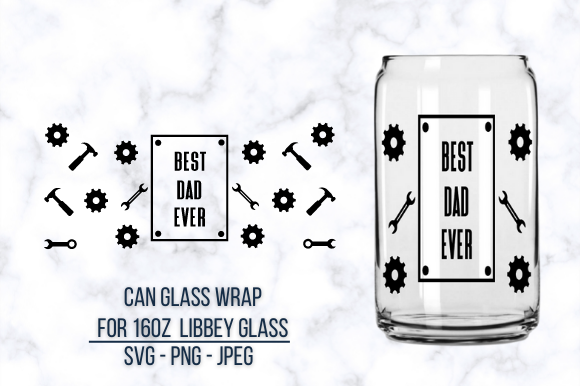
When I opened Best Dad Ever Libbey Glass Cup Wrap SVG, my first thought wasn’t “cute” — it was “clear intent.” This isn’t a generic script font slapped on a circle. It’s a wrap design calibrated for the curve of a 16oz Libbey glass: gentle arc, balanced spacing, and just enough visual weight to read cleanly at 3–4 inches tall. The lettering leans friendly but not childish — rounded sans-serif with subtle personality, no excessive flourishes or fragile serifs. As a designer who’s stitched hundreds of “Dad” motifs for baby blankets, Father’s Day aprons, and boutique tote bags, I appreciate how this avoids overdesign. It breathes. It fits. It feels like something you’d actually embroider — not just download and forget.
Where It Shines: Real Projects, Real Customers
I tested Best Dad Ever Libbey Glass Cup Wrap SVG as the centerpiece of a small-batch embroidered kitchen towel set — cotton twill, medium-weight stabilizer, standard 4×4 hoop. Stitched in navy thread on natural linen-look fabric, it landed exactly where I hoped: warm, legible, and quietly confident. No pixelation, no crowding. That’s because the design’s layout respects embroidery’s physical limits — letter height stays generous, kerning is open, and the curve follows stitch logic, not just vector geometry. It worked equally well scaled down for a baby onesie (using fill + satin stitch combo) and scaled up for a canvas tote bag (with added running stitch outline for definition).
For Etsy sellers and craft fair vendors, this design bridges sentiment and simplicity. It reads instantly on mockups — whether you’re listing a personalized sweatshirt or bundling it into a “Dad Survival Kit” with embroidered mugs and napkins. I also used it as an applique base for a denim cap: cut the shape from contrasting fabric, then stitched around the edge with satin stitch. The clean outer contour made registration effortless. And yes — it translated cleanly into a printable mockup for client approval. No redraws needed.
Where to Pause: Texture, Scale, and Fabric Reality
Not every surface welcomes this design without adjustment. On highly textured fabrics like terry cloth towels or bouclé knit sweatshirts, the subtlety of the letterforms can soften — especially the inner curves of “B,” “E,” and “R.” I recommend adding a light underlay stitch or switching to a slightly bolder thread weight (like 40wt instead of 60wt) to maintain crispness. On stretchy knits (think dad-sized tees or lounge pants), always test with tear-away + cut-away stabilizer combo — the wrap’s gentle curve can distort if the fabric shifts mid-stitch.
Dark fabric? It works — but only if your thread color has enough contrast. I tried charcoal gray thread on black cotton and lost definition fast. Stick with white, cream, or bright navy for maximum readability. And avoid using it full-size on curved surfaces smaller than a baseball cap front — the wrap’s natural arc gets compressed and letters start to crowd. For caps, consider isolating just “Best Dad Ever” and dropping the cup-wrap context entirely.
Design Integrity Meets Customer Trust
What makes Best Dad Ever Libbey Glass Cup Wrap SVG feel trustworthy to buyers isn’t just the sentiment — it’s the craftsmanship implied by its construction. Clean edges mean fewer thread breaks. Open counters mean no “filled-in” letters after washing. Moderate stitch density means it won’t stiffen lightweight fabrics or add bulk to baby items. When customers see this on a handmade pillow cover or embroidered tea towel, they don’t just see “Dad” — they see care, consistency, and intention. That perception lifts perceived value, especially for small shop products priced above impulse-buy range.
It also supports brand cohesion beautifully. If your craft business uses soft blues, warm grays, and organic textures, this design integrates seamlessly — no jarring contrast in tone or detail level. It doesn’t shout; it belongs. And for holiday embroidery or wedding gifts (think “Best Dad Ever” on a linen napkin set for the father-of-the-bride), it adds sincerity without cliché.
Practical Notes Every Embroidery Designer Should Check
- Always test on scrap fabric first — especially with your exact stabilizer and thread combo. What looks perfect on screen rarely behaves identically on cotton poplin vs. fleece.
- Review stitch density before scaling. If you enlarge beyond ~120%, check that fill areas don’t become overly dense — that’s where puckering starts.
- Confirm hoop size compatibility. While it’s built for a Libbey glass, the file itself may require a 5×7 or larger hoop depending on your final use case — verify before digitizing or sending to production.
- Inspect small details at actual stitch size. Zoom in on the inner counter of “e” and “a” — are they wide enough to clear thread buildup? If not, adjust manually or request a modified version.
- Test black-and-white mockups — this reveals contrast issues faster than color previews.
- Use proper stabilizer for your fabric type — lightweight cut-away for knits, tear-away for stable wovens, and fusible for layered garments like aprons.
- Check licensing before selling finished items. The description states “personal small business use” — confirm whether that covers physical products you sell, or only digital resale (which is prohibited). When in doubt, contact the seller.
Final Thought: A Quiet Workhorse, Not a Flashy Gimmick
Best Dad Ever Libbey Glass Cup Wrap SVG won’t win awards for complexity — and it shouldn’t. Its strength lies in reliability, adaptability, and emotional resonance. It’s the kind of machine embroidery design that disappears into the product while making the message unforgettable. Whether you’re an Etsy seller building a Father’s Day collection, a craft business owner sourcing consistent design assets, or a hobbyist stitching heartfelt gifts, this file earns its place in your library not through novelty, but through quiet, stitch-perfect utility. Just remember: even the best embroidery file needs thoughtful execution. Test it. Respect the fabric. Honor the thread. And let the sentiment speak for itself.