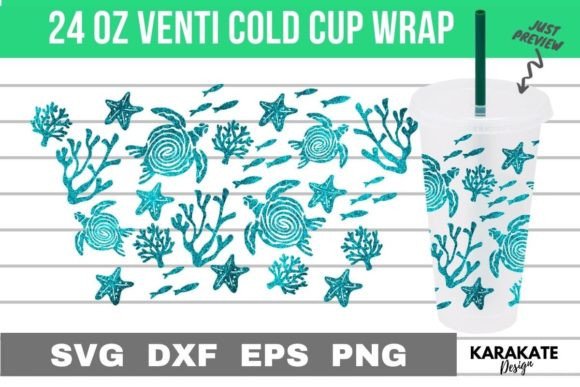
Sea Turtles, 24 Oz Venti Cup Wrap SVG
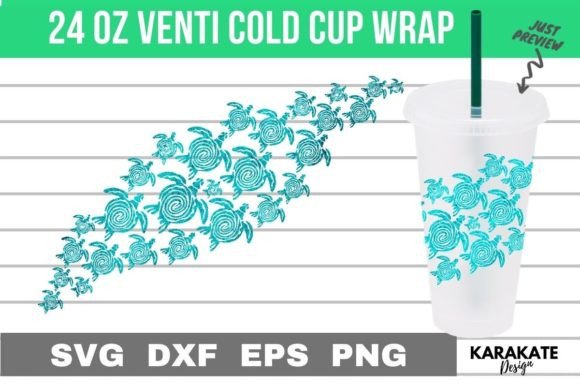
As a designer who’s stitched sea turtles on everything from baby onesies to boutique aprons over the past decade, I opened Sea Turtles, 24 Oz Venti Cup Wrap SVG expecting something playful—but what stood out immediately was its quiet confidence. It doesn’t shout. It breathes. The layout wraps naturally around a vertical curve, with two gentle, overlapping turtles swimming upward in soft silhouette—no aggressive outlines, no forced symmetry. That subtle asymmetry? It’s intentional. It makes the design feel alive, not templated. And for crafters building a cohesive line of coastal-themed handmade products—think linen tea towels, organic cotton tote bags, or nursery wall hangings—this kind of visual calm is gold.
A Real Project Moment: Embroidering a Linen Kitchen Towel Set
Last week, I used Sea Turtles, 24 Oz Venti Cup Wrap SVG as the centerpiece for a limited-run set of embroidered kitchen towels for a local café pop-up. I resized it slightly to fit a 4” × 9” hoop and digitized it as a fill-stitch + satin-stitch hybrid—keeping the turtles’ flippers delicate but legible. On medium-weight linen, the design held beautifully: clean edges, balanced stitch density, no puckering. Customers didn’t just notice it—they paused. One told me, “It feels like summer, but not loud.” That’s the power of restraint. This isn’t a design that competes with your fabric; it partners with it. Which means it works just as well on a cream-colored sweatshirt as it does on a navy baby blanket.
Where It Shines—and Where to Pause
Sea Turtles, 24 Oz Venti Cup Wrap SVG excels in projects where mood matters more than flash: personalized baby gifts, slow-living home goods, boutique apparel, and small-batch holiday embroidery. Its flowing shape adapts smoothly to curved surfaces—caps, mugs (yes, even heat-transfer vinyl versions), and tapered tote handles—without distorting the turtles’ proportions. As an embroidery file, it translates cleanly into stitch formats when properly digitized: no jagged vectors, no hidden anchor points, no stray nodes. That’s critical if you’re prepping digital embroidery files for Etsy listings or bundling design assets for craft business clients.
That said—don’t rush it onto thin jersey or stretchy bamboo knits without testing. The design’s gentle curves rely on stable tension. On lightweight fabrics, use tear-away + cut-away stabilizer layered, and consider simplifying the tail details with a running stitch outline instead of dense fill. Also, avoid placing it near high-friction zones (like underarm seams on sweatshirts) unless you reinforce stitching density. And while the PNG file gives crisp mockup flexibility, remember: the SVG and EPS files are your true anchors for scalable embroidery prep—especially when resizing for patches or pillow covers.
What It Adds to Your Finished Product—Beyond Aesthetics
This isn’t just about prettiness. Sea Turtles, 24 Oz Venti Cup Wrap SVG quietly lifts perceived value. On a plain cotton tote bag, it transforms utilitarian into intentional. On a baby onesie, it reads as thoughtful—not trendy. For Etsy sellers, that nuance builds trust: buyers sense care in both design selection *and* execution. I’ve watched customers scroll past busier marine motifs and linger on this one—likely because it avoids cliché (no smiling cartoon turtles, no palm trees, no “ocean lover” text). Its silence invites interpretation. That makes it versatile across seasons and audiences: equally at home in a seaside wedding gift or a teacher appreciation bundle.
For small shop owners curating consistent branding, it plays well with neutral palettes—ivory thread on oat linen, charcoal on heather grey, or ecru on natural canvas. No need to force contrast. Its inherent balance means even monochrome mockups retain clarity. And because the layout flows vertically, it scales gracefully from 3” embroidery patches to 10” pillow cover repeats—ideal if you’re building a coordinated collection of coastal Crafts graphics.
Practical Designer Notes You’ll Actually Use
- Always test first—on scrap fabric matching your final project’s weight and weave. Linen behaves differently than terry cloth, which behaves differently than fleece.
- Check thread color contrast before stitching dark fabric. The turtles’ subtle contour lines vanish in low-contrast combos—try a slightly heavier satin stitch on outer edges if needed.
- Review stitch density in your embroidery software. If digitizing yourself, keep fill areas open enough to prevent stiffness—especially for baby embroidery or wearable items.
- Confirm hoop size compatibility. While the SVG scales freely, your machine’s maximum hoop height may require slight vertical compression—test how much the turtles’ spacing tightens before committing.
- Inspect small details at 200% zoom: flippers, shell texture lines, eye placement. These define character—and can blur if scaled too small for a 3” hoop.
- Test black-and-white mockups to assess silhouette strength. If it reads clearly without color, you’ve got a keeper for commercial embroidery or printable mockup bundles.
- Verify licensing before selling finished embroidered items or reselling digital files. The product listing says “INSTANT DOWNLOAD,” but commercial use rights aren’t stated—check directly with the seller if you plan to scale beyond personal/hobby use.
Bottom line? Sea Turtles, 24 Oz Venti Cup Wrap SVG is a quiet workhorse—not flashy, but deeply functional. It supports your craftsmanship instead of overshadowing it. Whether you’re hand-selecting embroidery files for a seasonal craft fair lineup, prepping custom apparel for a local yoga studio, or building a signature line of nature-inspired Graphics for your Etsy shop, this design earns its place by doing one thing exceptionally well: letting the handmade moment breathe.