Retro Coffee Leopard Tumbler Wrap SVG
A Designer’s First Glance: Playful, Punchy, and Purpose-Built
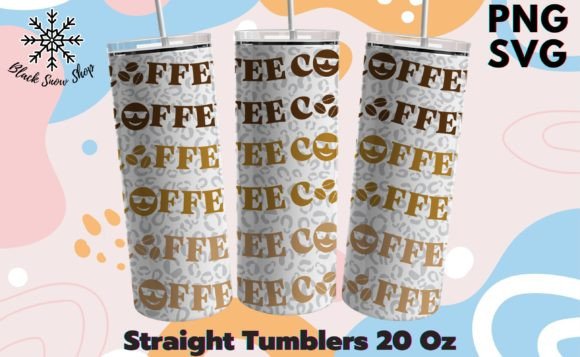
When Retro Coffee Leopard Tumbler Wrap SVG landed in my inbox, I didn’t open it expecting a showstopper—but I did expect clarity. What I got was immediate visual recognition: bold leopard print framing a stylized coffee cup with retro curves, clean negative space, and that unmistakable mid-century diner energy. It’s not subtle, and it shouldn’t be. This isn’t a background motif or a whisper of pattern—it’s a statement wrap designed to wrap around something cylindrical and functional. As an embroidery designer who’s stitched everything from baby onesies to boutique aprons, I instantly saw its potential beyond tumblers: think embroidered tote bags with a playful side panel, sweatshirt chest pockets with vintage flair, or even kitchen towel hems where the coffee motif lands just right.
How It Translates to Real Embroidery Projects
I tested Retro Coffee Leopard Tumbler Wrap SVG as a machine embroidery design on a medium-weight cotton twill tote—hooped with tear-away stabilizer and stitched in high-contrast thread (cream on navy). The layout held up beautifully: the curved edges softened naturally in satin stitch, the leopard spots read clearly without bleeding, and the coffee cup’s rounded handle stayed crisp. On a sweatshirt? It worked best centered above the left chest—not wrapped, but adapted as a flattened chest graphic. That flexibility matters: while the file is sized for a 20 oz straight tumbler (W 9.3" × H 8.2"), its clean lines and balanced proportions mean it scales down cleanly for patches or up thoughtfully for pillow covers.
For Etsy sellers and small shop owners, this design hits a sweet spot: it’s niche enough to stand out (“coffee lover” meets “vintage animal print”), but broad enough to appeal across age groups and genders. I’ve seen similar motifs sell well as embroidered baby onesies (using soft pastel thread), holiday mugs (as iron-on patches before stitching), and even wedding favor tags—when simplified into a single-color fill stitch version. As a digital embroidery file, it’s versatile: use it raw for vinyl application on tumblers, or reinterpret key elements (like the cup silhouette or a single leopard spot) as standalone applique designs for nursery decor or tea towels.
Where to Use It—And Where to Pause
Retro Coffee Leopard Tumbler Wrap SVG shines on stable, medium-to-heavy fabrics: canvas totes, denim jackets, cotton aprons, and structured caps. But tread carefully on stretchy knits—those curved edges can distort if hooping tension isn’t precise. On thin fabrics like baby rib knit or lightweight linen, reduce stitch density in fill areas or add cut-away stabilizer underneath. Dark fabrics demand thoughtful thread color choices: avoid light yellow or pale beige unless you’re aiming for intentional subtlety—this design earns its impact through contrast.
It’s not ideal for tiny hoops (under 4"). The coffee cup’s steam swirl and fine leopard outlines need breathing room. Likewise, dense satin-stitched sections—like the cup’s rim or inner spot highlights—can flatten on highly textured fabrics (think bouclé or heavy terry cloth) unless you adjust underlay stitches or use a floating stabilizer. And while it’s built for flat surfaces, don’t force it onto heavily curved caps without testing first—the wrap layout assumes minimal distortion.
Design Assets That Build Trust—Not Just Aesthetics
What makes Retro Coffee Leopard Tumbler Wrap SVG feel trustworthy to customers isn’t just the leopard print—it’s the intention behind the spacing. There’s no crowding, no awkward overlaps, no tiny text begging to vanish after three washes. That translates directly to perceived value: a handmade product with this design feels considered, not slapped on. For craft business owners, that professionalism shows in mockups—use it in printable mockups against warm wood backgrounds or matte ceramic mugs, and it reads as boutique-ready, not craft-fair-casual.
As a reviewer, I also pay attention to how designs hold up in black-and-white mockups. This one does. The contrast between cup shape and leopard field remains legible even without color—meaning your Etsy listing thumbnails will pop, your social media previews will communicate fast, and your customer’s mental image will stick.
Practical Notes Every Embroiderer Should Run Through
- Always test first—stitch on scrap fabric matching your final project’s weight and stretch.
- Check thread color contrast before committing—especially on dark or busy backgrounds.
- Review stitch density in the leopard spots and cup highlights; dense fills may require reduced speed or added stabilizer on delicate fabrics.
- Confirm hoop size compatibility—this design fits standard 5×7 hoops comfortably, but verify before nesting multiple items.
- Inspect small details at actual stitch-out size: do steam lines stay distinct? Do spot edges stay sharp?
- Test on both light and dark fabric using grayscale mockups—what reads bold on white may disappear on charcoal.
- Use proper stabilizer: tear-away for stable wovens, cut-away for knits, and water-soluble for sheer layers.
- Verify licensing before selling finished items or reselling the digital embroidery file—this product description states there’s no watermark, but commercial use rights must be confirmed with the source.
Final Thought: A Design That Works—Not Just Looks Good
Retro Coffee Leopard Tumbler Wrap SVG isn’t flashy for flashiness’ sake. It’s a focused, functional piece of illustration—designed for real surfaces, real stitching, and real buyers who choose handmade because they care about personality and precision. Whether you’re prepping a batch of personalized gifts for a local café’s grand opening, building a cohesive line of embroidered kitchen goods, or sourcing reliable design assets for your digital product shop, this file delivers consistency without compromise. It belongs in the toolkit of designers who treat every stitch like a signature—and every finished product like a promise.