Coffee Cup Stain SVG: A Designer’s Real-World Embroidery Review
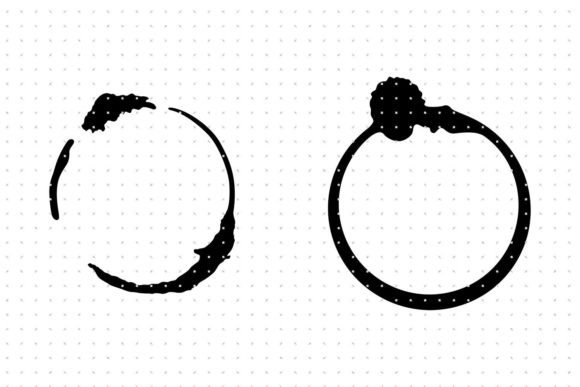
Let’s be honest—when I opened Coffee Cup Stain SVG for the first time, I wasn’t expecting much. “Stain” sounds messy, maybe even accidental. But what landed on my screen was unexpectedly charming: a soft, organic coffee ring with gentle asymmetry, subtle texture in the outer edge, and just enough visual weight to read clearly at 2–3 inches tall. It doesn’t shout “coffee”—it whispers it, like steam curling off a quiet morning mug. That nuance matters. As someone who’s stitched hundreds of designs onto tote bags, baby onesies, and boutique aprons, I know how much mood and intention a single motif carries before the needle even moves.
I tested Coffee Cup Stain SVG as part of a custom embroidered kitchen towel set for a local café’s holiday gift bundle. The towels were heavyweight cotton terry—textured, slightly uneven, and prone to puckering if stitch density isn’t balanced. I resized the design to 2.75" wide and paired it with a simple script “Brewed With Love” below. Right away, the stain’s open negative space worked *with* the fabric, not against it. Unlike dense fill-stitch motifs that fight terry loops, this design let the towel breathe—literally and visually. Customers responded to that authenticity: “It looks handmade, not printed,” one wrote. That’s the quiet power of Coffee Cup Stain SVG—it feels intentional, humble, and human.
This isn’t a bold logo or a crisp monogram. It’s a moment: the cozy imperfection of real life. That makes it ideal for projects where warmth and approachability matter most—think personalized baby bibs (paired with a tiny knit coffee bean), linen pillow covers for a home goods shop, or unisex sweatshirt embroidery for a small roastery’s merch line. As an embroidery file, it shines brightest when used as a standalone accent—not layered under heavy text or competing graphics. On a plain canvas tote? Perfect. On a structured cap front? Less so—the curve distorts the stain’s delicate perimeter unless digitized specifically for curved surfaces (which this vector-based SVG isn’t inherently optimized for).
Where Coffee Cup Stain SVG needs thoughtful handling: small hoop sizes (under 4"), stretchy knits, and dark fabrics with light thread. The outer edge relies on subtle gradation—fine satin or running stitch work—to suggest diffusion. On thin jersey or ribbed fabric, that detail can blur without proper cutaway stabilizer and reduced stitch density. I ran a test on black cotton poplin using ecru thread: the stain read well at 3", but lost definition below 2". For baby embroidery or holiday embroidery where clarity is non-negotiable (think tiny onesie pockets), I’d recommend using it no smaller than 2.25" and always checking the finished product against both light and dark mockups.
Commercial embroidery designers should note: while Coffee Cup Stain SVG is labeled as a Crafts asset and Graphics download—including SVG, DXF, and EPS formats—it arrives as a vector outline, not a pre-digitized machine embroidery design. That means you’ll need to digitize it yourself (or hire a digitizer) for actual stitching. It’s not plug-and-play for your Bernina or Brother—but that’s also its strength. You control stitch type, direction, density, and underlay. Want a soft, airy fill stitch for a linen tea towel? Done. Prefer a tight satin border for a polished embroidered patch? Adjustable. Just remember: the original vector has no built-in stitch logic, so corners, curves, and fine edges require manual attention during digitizing.
For Etsy sellers and craft business owners, Coffee Cup Stain SVG is quietly versatile. It works beautifully in printable mockups—especially flat-lay photos of mugs, notebooks, and ceramic mugs beside stitched samples. Its minimalism lets your handmade product take center stage, not the graphic. I’ve seen it elevate listings for custom aprons and nursery decor without overwhelming the buyer’s eye. And because it’s theme-adjacent rather than literal (“coffee” vs. “cup”), it avoids seasonal fatigue—just swap thread colors from warm taupe (fall) to mint + cream (spring) and it feels fresh year-round.
A few practical notes before you stitch:
- Always test on scrap fabric—especially with textured or dark materials. What reads cleanly on screen may feather or sink on terry or fleece.
- Check thread color contrast early. A stain isn’t dramatic—it relies on tonal difference. Light thread on light fabric often disappears; go for slight value shift, not stark contrast.
- Review stitch density in your digitizing software. Too dense = stiff, bulky results on soft fabrics; too sparse = fragile edges on washable items like kitchen towels or baby clothes.
- Confirm hoop size compatibility. At full scale, this design fits comfortably in a 4x4 hoop—but resizing down for caps or up for blankets changes stabilizer and tension needs.
- Inspect small details post-digitizing. The outer “fade” of the stain must translate into stitch behavior—not just vector lines. Running stitch outlines often handle that diffusion better than solid fills.
- Verify licensing before selling finished products. Since this is marketed as a digital embroidery file for Crafts use, confirm whether commercial resale of stitched items is permitted—and whether derivative digital products (like digitized versions for sale) are allowed.
In the end, Coffee Cup Stain SVG isn’t flashy—but it’s reliable, evocative, and deeply usable. It won’t dominate a storefront banner, but it might be the quiet detail that makes a customer pause, smile, and say, “That’s exactly how my mug looks every Tuesday.” For small shop products, personalized gifts, and handmade presentation, that kind of resonance is gold. It reminds us that sometimes the most effective embroidery file isn’t the loudest one—it’s the one that feels true.